Stablecoin payroll gets built-in yield with Paxos Labs-Toku integration

Paxos Labs has partnered with Toku to introduce a stablecoin payroll solution that incorporates built-in yield for employees. This innovative integration allows companies to pay their workers in stablecoins while simultaneously providing them with the opportunity to earn interest on their earnings. By leveraging blockchain technology, this approach not only streamlines the payroll process but also enhances the financial benefits for employees. The collaboration aims to attract businesses looking to modernize their payroll systems and offer competitive advantages in employee compensation. This move reflects the growing trend of integrating cryptocurrency solutions into traditional financial practices.


New wallet offers way to tackle Bitcoin’s quantum risk without a fork

A new cryptocurrency wallet has been introduced that aims to address the potential risks posed by quantum computing to Bitcoin without the need for a network fork. As quantum technology advances, concerns have grown regarding its ability to break traditional cryptographic security measures used in blockchain systems. This innovative wallet incorporates advanced cryptographic techniques designed to enhance security against quantum threats, providing users with a proactive solution. By leveraging these new methods, the wallet seeks to safeguard Bitcoin investments and transactions, ensuring the cryptocurrency's resilience in a future where quantum computing is more prevalent.

YouTube is testing an AI-powered search feature that shows guided answers

YouTube is currently experimenting with a new AI-powered search feature designed to provide users with guided answers to their queries. This innovative tool aims to enhance the search experience by delivering more direct and informative responses, rather than just a list of video links. By leveraging artificial intelligence, YouTube hopes to make it easier for users to find specific information quickly and efficiently. This testing phase reflects the platform's ongoing efforts to improve user engagement and satisfaction, keeping pace with the growing demand for more interactive and intuitive online experiences.

Aave-linked DeFi United unveils rsETH recovery plan after $293M Kelp exploit

DeFi United, associated with the Aave protocol, has announced a recovery plan following a significant $293 million exploit of its Kelp platform. The incident has raised concerns within the decentralized finance community, prompting urgent action to restore user confidence and secure funds. The recovery strategy includes measures to compensate affected users and enhance security protocols to prevent future vulnerabilities. This incident highlights the ongoing challenges and risks in the rapidly evolving DeFi landscape, as stakeholders strive to balance innovation with security. The response from DeFi United aims to reinforce trust and stability in the ecosystem amidst these turbulent developments.

Visa is teaming up with a Tether co-founder to build onchain banks

Visa is partnering with a co-founder of Tether to develop on-chain banking solutions, marking a significant step into the blockchain space. This collaboration aims to create a new financial ecosystem that leverages the strengths of both traditional banking and digital currencies. The initiative is expected to enhance payment processing and provide greater accessibility to financial services through blockchain technology. As digital currencies continue to gain traction, Visa's move reflects a growing trend among financial institutions to innovate and adapt to the evolving landscape of digital finance. This partnership could pave the way for more robust and secure banking options in the future.

White House Crypto Adviser Hints at ‘Breakthrough’ Bitcoin Reserve Move

The White House's cryptocurrency adviser has suggested that a significant development regarding Bitcoin reserves could be on the horizon. This announcement comes amid ongoing discussions about the role of digital currencies in the U.S. economy and regulatory landscape. The adviser hinted at potential strategies that could enhance the government's engagement with cryptocurrencies, particularly Bitcoin. As interest in digital assets continues to grow, this move could mark a pivotal shift in how the administration approaches crypto policy and investment, potentially influencing market dynamics and investor sentiment.

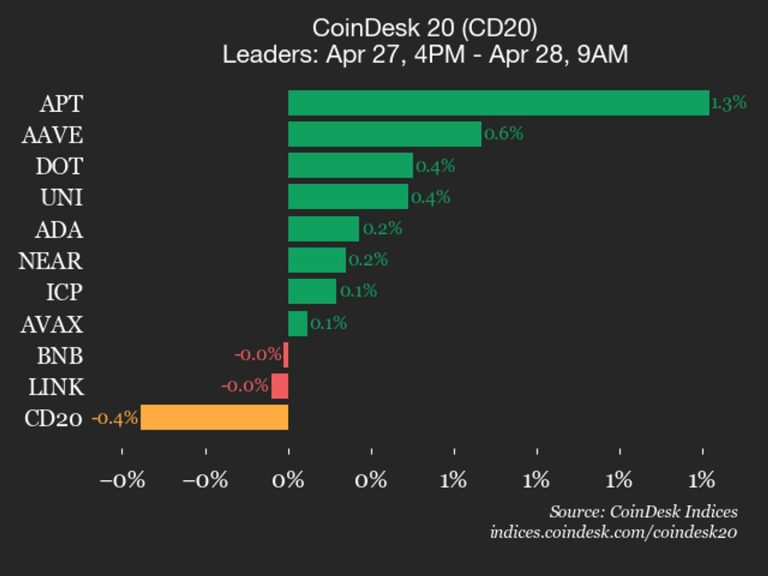
CoinDesk 20 performance update: Stellar (XLM) drops 1.7% as index moves lower

Stellar (XLM) has experienced a decline of 1.7% as the CoinDesk 20 index, which tracks the performance of leading cryptocurrencies, continues to trend downward. This drop reflects broader market challenges, with many digital assets facing pressure amid fluctuating investor sentiment and economic uncertainties. The performance of XLM is part of a larger trend impacting various cryptocurrencies, prompting analysts to reassess market dynamics. As investors navigate these fluctuations, the overall outlook for the crypto market remains cautious, highlighting the need for strategic decision-making in an evolving landscape.

BCI startup Neurable looks to license its ‘mind-reading’ tech for consumer wearables

Neurable, a pioneering brain-computer interface (BCI) startup, is making strides in the realm of consumer technology by developing mind-reading capabilities for wearable devices. The company aims to license its innovative technology to manufacturers, enabling users to control gadgets through thought alone. With a focus on enhancing user experiences across various applications, Neurable's advancements could revolutionize how people interact with technology. As the demand for intuitive and accessible interfaces grows, the startup positions itself at the forefront of a burgeoning industry, promising to bridge the gap between human cognition and digital devices.

Startale to add Privacy Boost transfers to Sony-linked Soneium app

Startale is set to enhance its Soneium app, which is linked to Sony, by introducing Privacy Boost transfers. This new feature aims to provide users with increased privacy and security for their transactions and data transfers within the app. As digital privacy concerns continue to grow, Startale's initiative reflects a broader trend in the tech industry to prioritize user confidentiality. The integration of Privacy Boost is expected to attract more users to the Soneium app, positioning it as a leader in secure digital solutions. This move underscores Startale's commitment to innovation and user-centric features in the evolving tech landscape.

Red Hat’s OpenClaw maintainer just made enterprise Claw deployments a lot safer

Red Hat's recent update to OpenClaw, its open-source enterprise software, significantly enhances the security of Claw deployments. The maintainer's improvements address critical vulnerabilities, ensuring that organizations can operate their applications with greater confidence. This update not only fortifies the software against potential threats but also aligns with Red Hat's commitment to providing robust and secure solutions for enterprise users. As businesses increasingly rely on open-source technologies, these enhancements are crucial for maintaining operational integrity and protecting sensitive data. The move underscores Red Hat's proactive approach to security in the ever-evolving landscape of cybersecurity challenges.